April 2026 · 8 min read
Best Orchestra Alternatives for Small Agencies (2026)
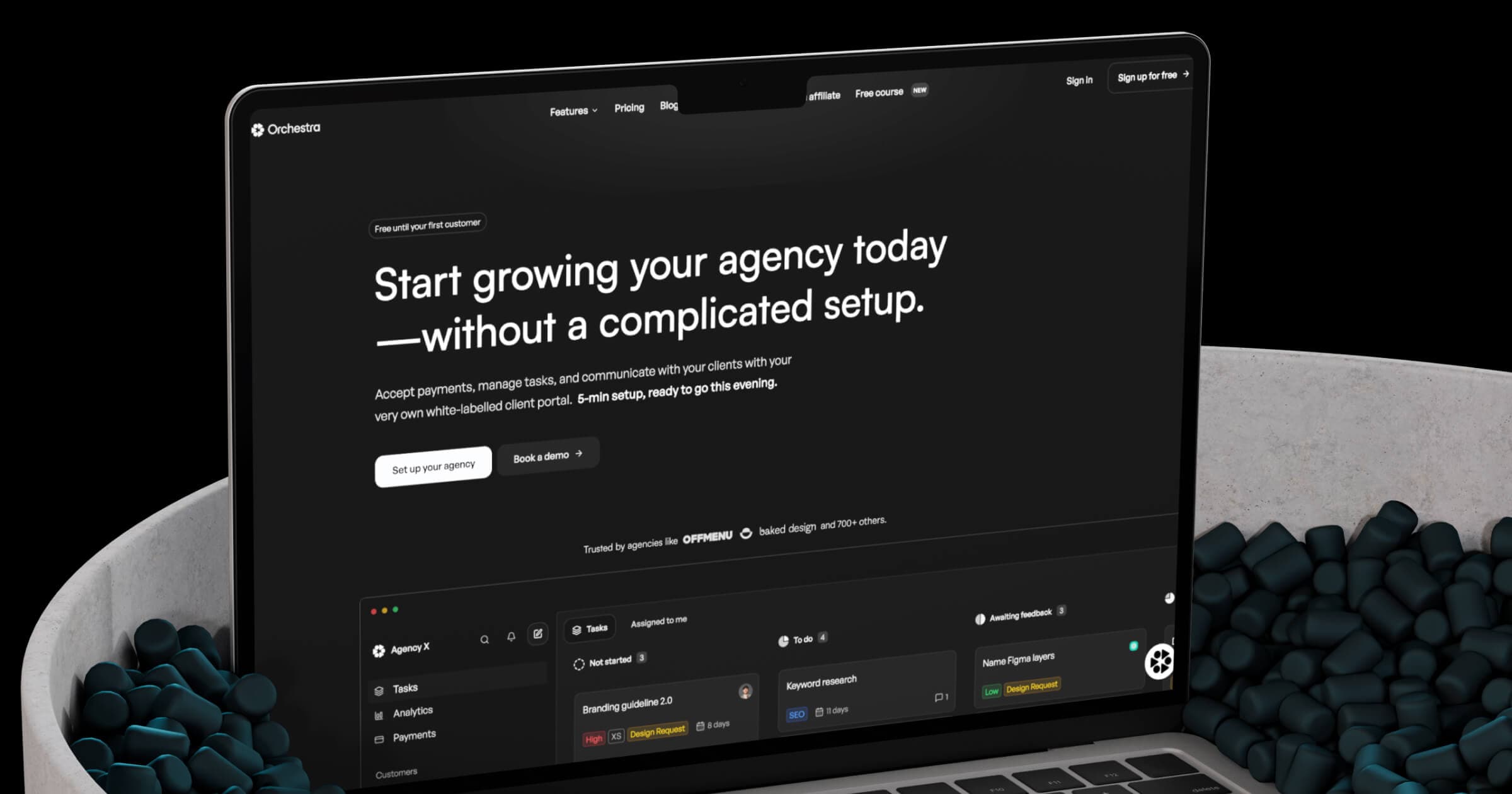
If you use Orchestra to run your agency, you've probably hit one of these walls: your client still gets an invitation email from getorchestra.com even though you paid for white-label, or you can't set a price like €19.99 because the platform only accepts whole numbers.
These are real user complaints, not edge cases. Orchestra is a solid product for what it is. But it's built for a broad range of productized agencies, which means some specific pain points for small studios stay unresolved for longer than you'd like.
This article lists the best Orchestra alternatives in 2026 — with pricing, honest tradeoffs, and a clear recommendation for each type of agency.
Why agencies look for Orchestra alternatives
Orchestra launched in 2024 as a rebrand of Breeew and now powers 700+ agencies. The core proposition is strong: one white-label client portal, Stripe billing, and task management in one place. For many agencies, that's exactly what they need.
But a few recurring complaints push agencies to look elsewhere.
White-label email delivery doesn't fully work on lower plans
One AppSumo reviewer put it plainly: even with a custom email domain configured, clients still received their portal invitation from the getorchestra.com domain. For a white-label product, that's a notable gap. Full email white-labeling — including sending from your own domain — is only available on the Scale plan at $124/month.
Pricing can only be set in whole dollar amounts
Several AppSumo reviewers report that pricing can only be set in whole dollar amounts, with no option for prices like $19.99 or €49,50. This may have been addressed since those reviews were written, but it's worth checking before you commit if psychological pricing matters to your packages.
Stripe is the only payment gateway
Orchestra is built on Stripe. If your clients pay via bank transfer, PayPal, or a local payment method like iDEAL, you're handling that outside the system. There's no native support for other gateways within the portal flow.
No intake forms, proposals, or client approval flows
If your service starts with a client filling out a form, reviewing a proposal, or signing off on a deliverable, you'll need to build that outside Orchestra. The platform focuses on what happens after a client is onboarded, not the process of getting them there.
What to look for in an Orchestra alternative
Before comparing tools, it helps to know what actually matters for a small agency running productized services:
- White-label that actually works — your portal, your domain, your email. The client never sees the tool you're using.
- Client limits that match your scale — solo operators and 2–3 person agencies don't need unlimited clients. They need a fair price for 5–15 active clients.
- Flexible billing — subscriptions, one-time payments, custom pricing. And support for local payment methods if you work with European clients.
- Simple enough that your clients actually use the portal — a portal your client ignores is no portal at all.
- Pricing that makes sense before you have revenue — free or very cheap until you're actually making money from the tool.
The best Orchestra alternatives in 2026
1. Setorio — best for small agencies with productized services
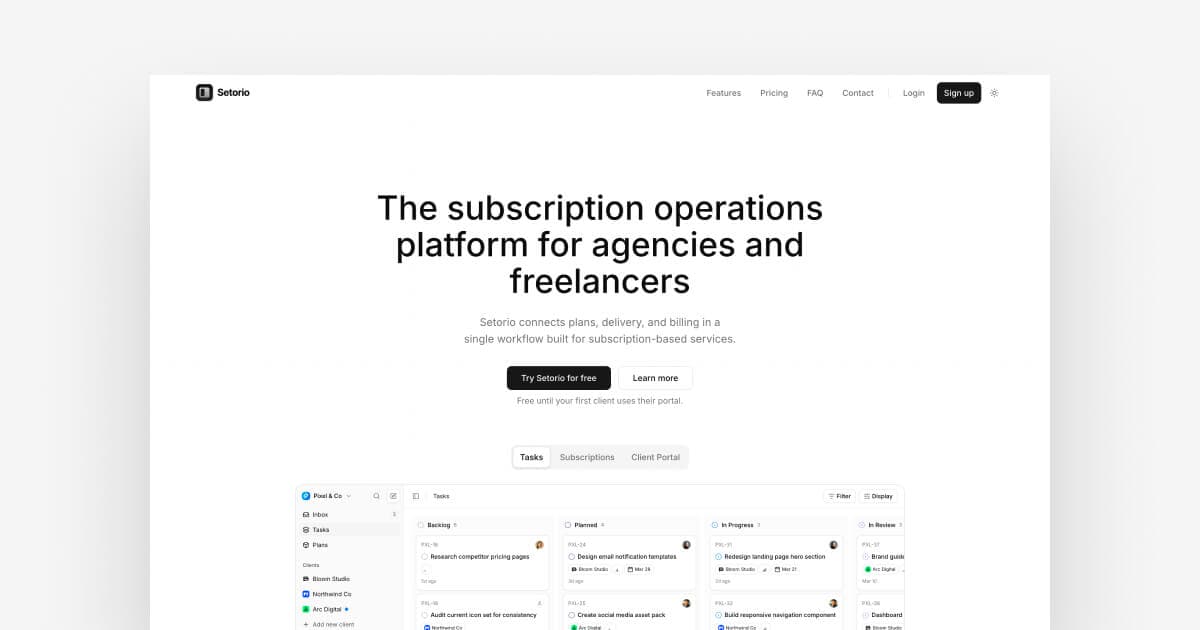
Setorio is built specifically for solo operators and agencies of 1–3 people selling recurring services. It came out of the same frustration that drives most people to look for an Orchestra alternative: existing tools either lacked proper local integrations, had a client portal that clients found confusing, or charged too much before you had any paying customers.
What it does differently
Setorio is free until your first real client opens their portal. Not a trial, not a 14-day window — free until you're actually using it to run a paying client relationship. After that, pricing starts at €19/month for the Solo plan.
The billing layer supports both Stripe and Moneybird, which matters if you invoice Dutch or European clients and need proper VAT handling. They're mutually exclusive per workspace by design — you pick the one that fits how you run your finances.
White-labeling works the way it should: custom domain, custom colors, and the Setorio badge toggles off on Studio and Agency plans. Your client portal looks like it's yours.
For a full overview of the features bundled at this scale, see Setorio for small agencies.
| Plan | Price | Active clients | Team members |
|---|---|---|---|
| Solo | €19/month | 5 | 1 |
| Studio | €49/month | 15 | 3 |
| Agency | €99/month | Unlimited | 5 |
Yearly billing saves 17%. All prices exclude VAT.
- Best for
- Solo designers, Webflow studios, marketing agencies, and small development shops selling monthly service packages to a focused set of clients.
- Worth knowing
- Setorio is earlier-stage than some tools on this list. Orchestra has been around longer and publicly reports serving 700+ agencies. Setorio is actively developed and the roadmap is shaped directly by early users.
2. ManyRequests — best for request-heavy agencies
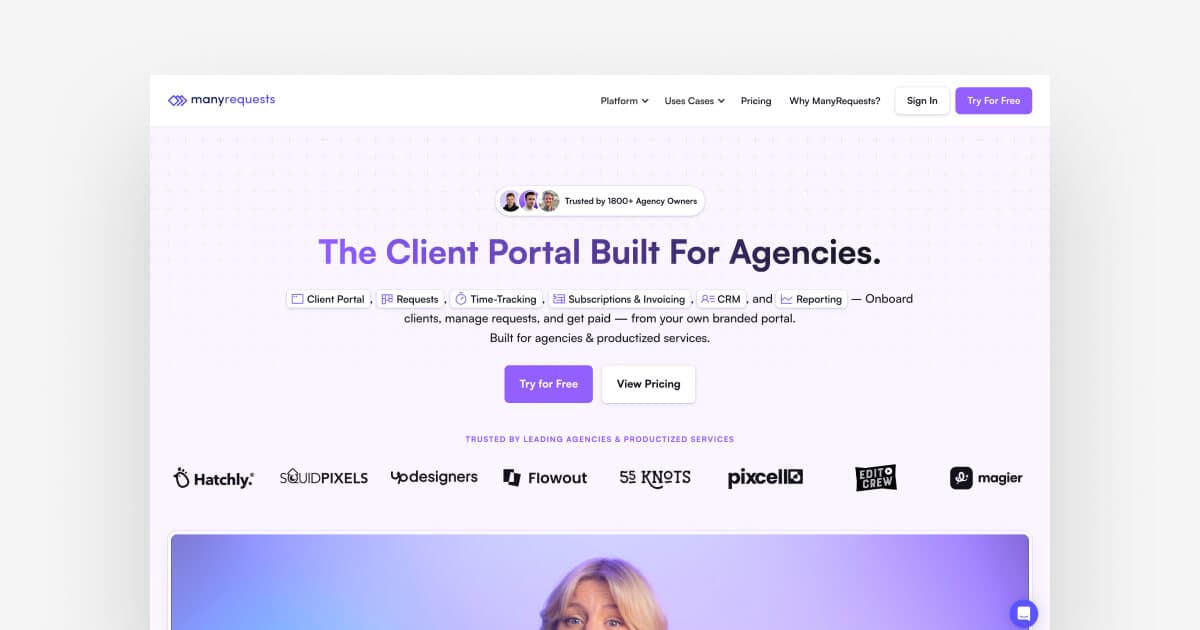
ManyRequests is one of the most established tools in this space. It's built around a request-based workflow where clients submit work requests and your team processes them in a queue — similar to how services like Design Pickle or Designjoy operate.
- Best for
- Design agencies offering unlimited requests as a productized service.
- Pricing
- Plans currently start at $59/month (Core) and $99/month (Pro). White-label email is available on higher plans.
- Pros
- Strong client portal, built-in intake forms, good request management, client-facing branding.
- Cons
- Designed primarily for unlimited-revision design services. If your agency doesn't operate on a request model, a lot of the functionality won't apply. Even the entry plan is notably more expensive than Orchestra or Setorio.
3. Wayfront (formerly SPP) — best for agencies that need proposals and helpdesk
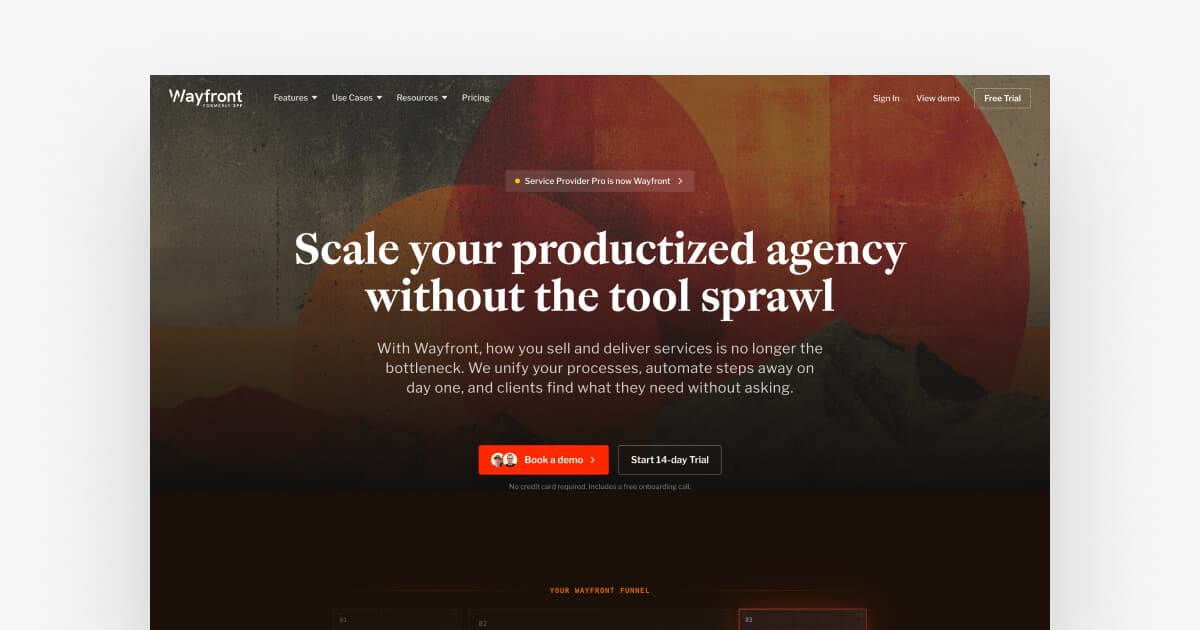
Wayfront, formerly Service Provider Pro, is the most feature-complete tool in this category. It supports order forms, a built-in helpdesk, reseller programs, PayPal and ACH in addition to Stripe, and fine-grained user roles. If you've outgrown simpler tools and need more control over your client onboarding and support flows, Wayfront is worth looking at.
- Best for
- Agencies with 10+ clients, complex onboarding, and a need for built-in client support workflows.
- Pricing
- Starts at $129/month, or effectively $99/month when billed annually.
- Pros
- Proposals, order forms, helpdesk, multiple payment gateways, strong permissions model.
- Cons
- Complexity that most small agencies don't need. Pricing reflects that. Setup takes longer and there's more to configure before you can send a client their portal link.
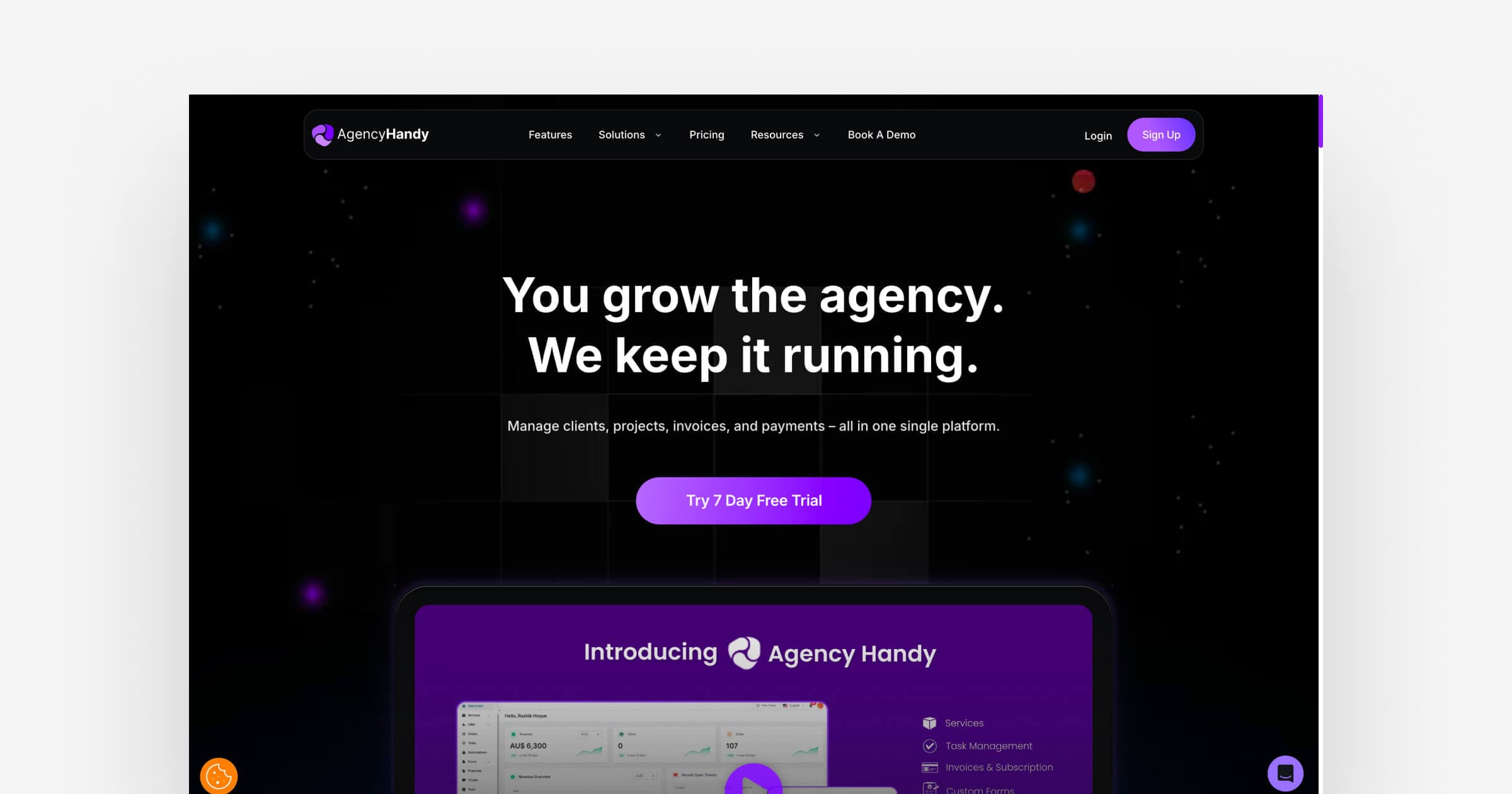
4. Agency Handy — best for agencies with complex service packages
Agency Handy positions itself as the option for agencies that have outgrown simpler tools. It offers a multi-package service catalog, intake forms, approval workflows, and broader billing options including PayPal.
- Best for
- Agencies with multiple service tiers, add-ons, and multi-step onboarding flows.
- Pricing
- The Freelancer plan starts at $19/month. Team-oriented plans start at $99/month and go up from there.
- Pros
- More flexible service catalog than Orchestra, intake and approval flows, more billing options.
- Cons
- Less focused on the small-agency use case. Some users find the interface busier than necessary for straightforward productized services.
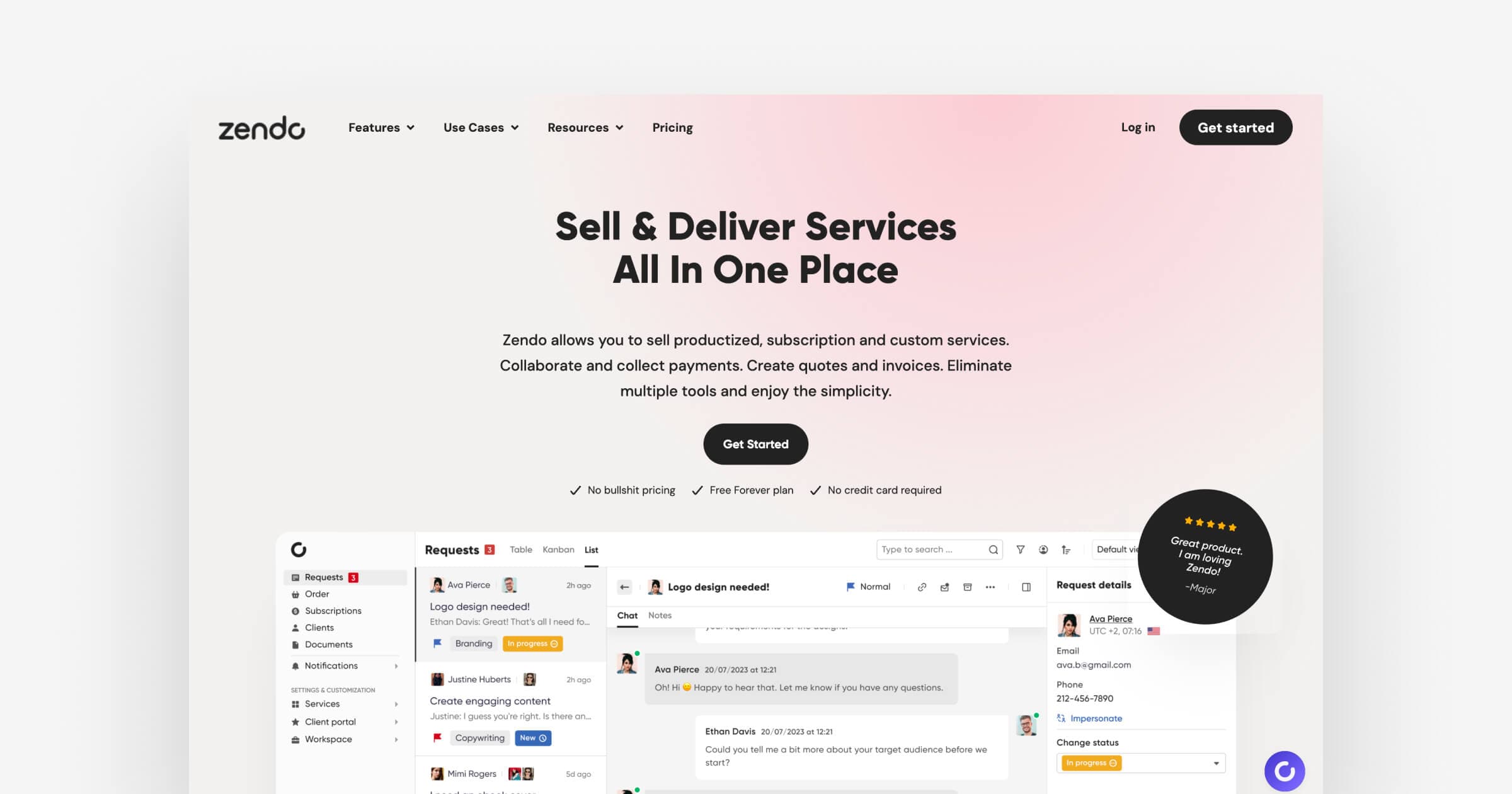
5. Zendo — free option worth knowing about
Zendo is often mentioned as a free or very low-cost alternative in this space. It covers the basics: client portal, subscription billing, and a simple request flow.
- Best for
- Freelancers or very early-stage solo operators who need a simple portal and aren't ready to pay for a tool yet.
- Pricing
- Free tier available (Essential plan, 1 internal user). Pro plans start around $24.50/month with custom domain and full white-label email.
- Pros
- Low cost to start. Reasonable feature set for basic client portal and billing needs.
- Cons
- Less actively developed than the others on this list. Fewer integrations. If you need solid Stripe Connect, multiple team members, or local invoicing integrations, you'll hit its limits quickly.
Feature comparison
| Feature | Setorio | Orchestra | ManyRequests | Wayfront | Agency Handy |
|---|---|---|---|---|---|
| Starting price | €19/mo | $25/mo | $59/mo | $129/mo ($99 annual) | $19/mo |
| Free until first client | Yes | Yes | No | No | No |
| White-label email | All paid plans | Scale only ($124/mo) | Higher plans only | Yes | Yes |
| Custom portal domain | All paid plans | Starter & Scale | Yes | Yes | Yes |
| Stripe integration | Yes | Yes | Yes | Yes | Yes |
| Moneybird integration | Yes | No | No | No | No |
| Intake forms | Roadmap | No | Yes | Yes | Yes |
| Helpdesk / ticketing | No | No | No | Yes | No |
| PayPal / local payments | No (Stripe or Moneybird) | No | No | Yes | Yes |
| Pricing to cents (€9.99) | Yes | Reported as No* | Yes | Yes | Yes |
*Based on AppSumo user reviews. May have changed — verify before purchasing if this matters to your workflow.
Frequently asked questions
Is Orchestra free?
What is the main difference between Setorio and Orchestra?
Can I migrate from Orchestra to Setorio?
Which Orchestra alternative is best for a solo designer?
Does Setorio work outside the Netherlands?
Conclusion
Most of Orchestra's white-label and email branding limitations disappear on the Scale plan — which is why many agencies only consider it truly production-ready at that tier ($124/month). If that price point works for your MRR, Orchestra is a reasonable choice.
If you're a small agency — solo or a team of 2–3 — running productized services with recurring subscriptions, Setorio is worth trying. It's built exactly for that setup, it's free until you're actually using it with a paying client, and it handles European invoicing properly.