April 2026 · 8 min read
Best Wayfront (Service Provider Pro) Alternatives for Small Agencies in 2026
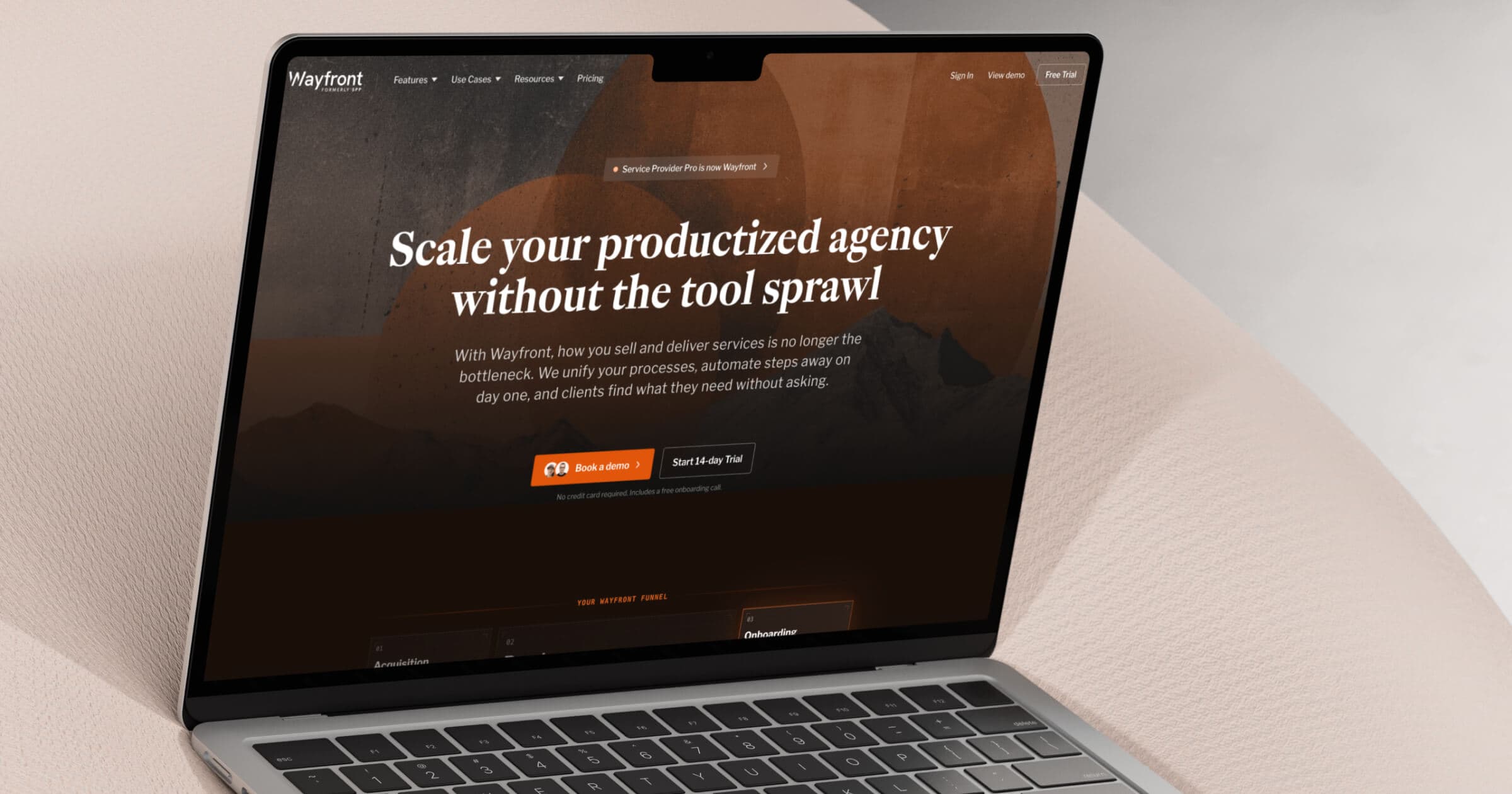
If you use Wayfront — formerly known as Service Provider Pro — to manage your agency's subscriptions and client portal, you probably ran into the same thing at some point: the pricing doesn't quite fit a 1–3 person shop.
Wayfront is a solid platform. It's been around since around 2014, processes over $500 million in productized services, and has a strong reputation for support. But it's built for agencies with 5 to 50+ team members. If you're smaller than that, you're paying for seats you don't need and waiting on an enterprise tier to unlock things like API access and full white-labeling.
This article covers the best Wayfront alternatives for small agencies in 2026, specifically for solo operators and small teams selling recurring services.
Why agencies are looking for Wayfront alternatives
The pricing doesn't scale down
Wayfront's Base plan starts at $129/month when billed monthly, or $99/month on annual billing. That's the entry point, and it includes 5 team seats. If you're a solo operator or a two-person agency, you're paying for seats you'll never fill.
When you need more than 10 internal users, you're on the Pro plan at $249–299/month and paying $18–20 per extra seat on top. A 15-person team on Pro, for example, runs $299 + (5 × $20) = $399/month. Before you've unlocked API access or full white-labeling, you're approaching $400/month just on headcount.
Full white-labeling is locked behind the enterprise tier
On the Base and Pro plans, Wayfront shows “Powered by Wayfront” in client-facing interfaces. Removing that requires the Plus plan, which is custom-priced and aimed at agencies with 50+ team members. For a small agency that's selling a premium service experience, having a third-party brand visible in your client portal is a real problem.
The API requires an enterprise contract
Building custom integrations or automating workflows beyond Zapier requires API access. On Wayfront, that's Plus-only. For smaller teams who want to connect their client portal to other tools without Zapier limits, this creates a ceiling.
Conversations are siloed per order
Several users across review platforms mention that client messages are tied to individual orders rather than a unified inbox per client. If a client has three active subscriptions, their communication is split across three threads. That adds friction when you're trying to support fast-moving clients.
What to look for in a Service Provider Pro alternative
Before switching, it's worth being clear about what actually matters for your agency. For small agencies with productized services, the key requirements are:
- Client portal quality — Clients need a clean, branded space to view their subscriptions, invoices, and project status. A messy portal leads to more support questions, not fewer.
- Subscription and billing management — If you sell retainers or monthly packages, the tool needs to handle recurring payments natively, ideally with both Stripe and local invoicing integrations.
- Pricing that fits a small team — A tool with 5-seat minimums and $100+/month entry pricing doesn't make sense for a solo or two-person shop. You need pricing that starts when you actually need it.
- White-labeling without enterprise contracts — Your clients shouldn't see another company's logo in their portal. Full branding control should be available from day one.
The best Service Provider Pro alternatives in 2026
1. Setorio — Built specifically for small agencies with productized services
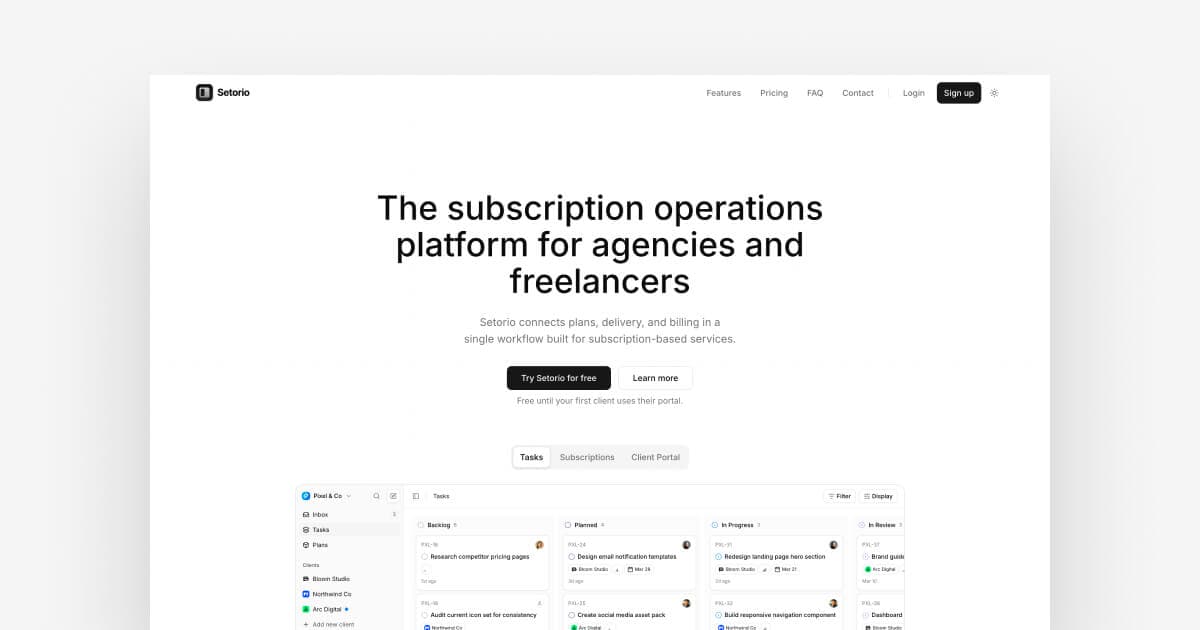
Setorio is built for exactly the agencies that SPP/Wayfront isn't optimized for: solo operators and small teams (1–3 people) who sell monthly subscription packages to clients.
What makes it different
Where Wayfront starts at $99–129/month for a plan designed around 5 team seats, Setorio's Solo plan starts at €19/month and covers a single operator with up to 5 active clients. That's the right starting point for a freelance designer, Webflow studio, or marketing consultant running a productized offer.
Setorio is free until your first real client opens their portal. That means you can set everything up, build your services, and only start paying when you've landed a paying client. No risk, no monthly commitment before you're ready.
The client portal is clean and fully branded from the Solo plan onward. Clients get a dedicated space to view their active subscriptions, invoices, and project status. No “Powered by” badge unless you choose the Solo plan where it stays on as a trade-off for the lower price point. Studio and Agency plans get a toggle to remove it entirely.
Billing connects to either Stripe or Moneybird, your choice. For Dutch and European agencies, the Moneybird integration is a significant advantage over most alternatives that only support Stripe.
| Plan | Price | Active clients | Team members |
|---|---|---|---|
| Solo | €19/month | 5 | 1 |
| Studio | €49/month | 15 | 3 |
| Agency | €99/month | Unlimited | 5 |
All plans: free until first client opens their portal.
- Best for
- Solo operators and small agencies (1–3 people) selling monthly subscriptions in design, development, marketing, content, or any other productized niche.
2. Orchestra — Freemium option with strong task management
Orchestra is a client portal and project management tool with a freemium model. It's a popular alternative for agencies that want to get started without a monthly commitment.
Orchestra covers client portals, task management with Kanban boards, real-time notifications, and Stripe integration. The UI is modern and the free tier is genuinely functional, not just a limited trial.
The main trade-offs compared to SPP and Setorio are that billing and subscription management are less developed, and the platform is positioned more around project delivery than recurring service management. If your agency's main need is task tracking and client visibility rather than subscription billing, Orchestra is worth looking at.
- Best for
- Agencies that prioritize project management and collaboration over billing workflows, especially teams that want to start on a free plan.
For a full comparison, see our Orchestra alternatives overview.
Visit Orchestra3. ManyRequests — Request-based workflows for creative agencies
ManyRequests is built around a request-and-delivery model, making it popular with design agencies, video editors, and other creative service providers who work in a queue-based system.
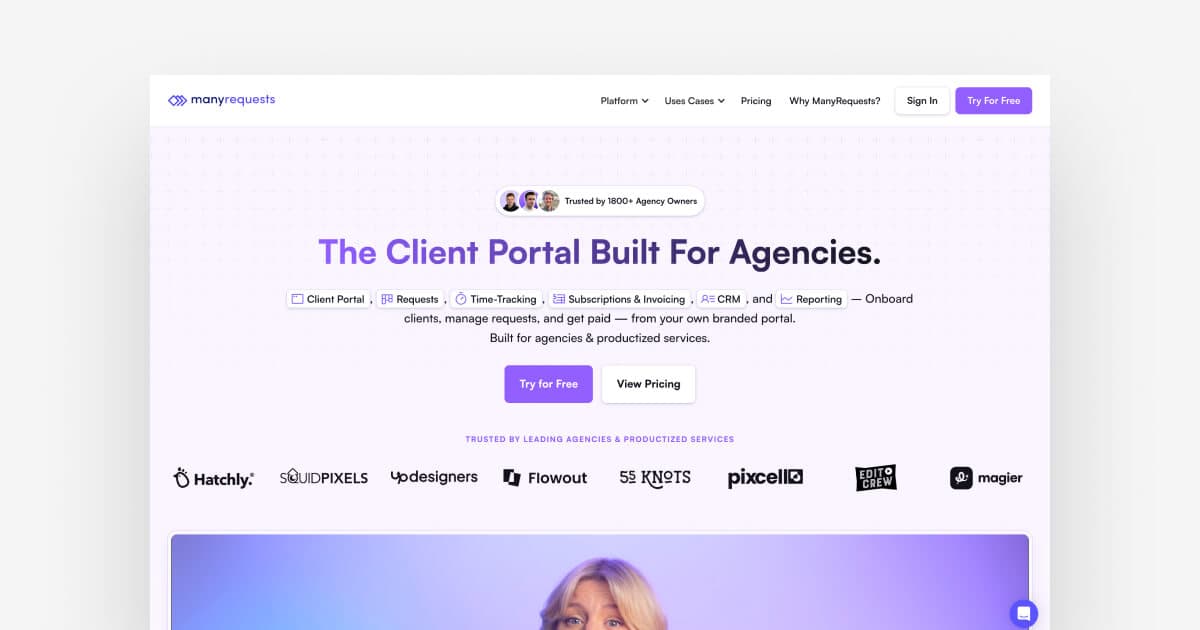
Clients submit requests through a branded portal, the agency delivers, and the client reviews and approves. It's a clean workflow for agencies with a fixed monthly request capacity model.
Where it falls short as a Wayfront alternative: ManyRequests supports Stripe only, doesn't include native PayPal or bank transfer options, and requires higher-tier pricing (Pro at $399/month) to unlock features that Wayfront and Setorio offer at lower tiers. The platform is also primarily optimized for request-based work rather than subscription management or retainer billing.
Pricing starts around $99/month for the entry plan, with a feature set that's more limited than SPP at a similar price point.
- Best for
- Creative agencies (design, video, copywriting) running high-volume request queues on a fixed monthly model. Less suited for agencies that need robust subscription management or multi-method billing.
4. SuiteDash — All-in-one for agencies that need everything under one roof
SuiteDash is a broad business management platform that covers CRM, project management, billing, client portals, and internal workflows. It's positioned as a white-label client portal for agencies and consultants who want one system to replace multiple tools.
The upside is comprehensive coverage at a lower price point than Wayfront's higher tiers. SuiteDash's Pinnacle plan (around $99/month) includes unlimited contacts, projects, and team members, with strong white-labeling from the start.
The downside is that the breadth comes with complexity. SuiteDash has a steep learning curve and an interface that takes time to configure properly. For small agencies that want to get a client portal running in a day, it's a heavier lift than more focused alternatives.
- Best for
- Agencies that need broad business management features and are willing to invest time in setup. Less suited for teams that want a clean, focused subscription management experience.
Feature comparison
| Feature | Setorio | Wayfront (SPP) | Orchestra | ManyRequests |
|---|---|---|---|---|
| Starting price | €19/mo | $129/mo ($99 annual) | Free tier available | ~$99/mo |
| Free until first client | Yes | No (14-day trial only) | Partial (free tier) | No |
| White-label portal | From Studio plan | All plans (partial) | Yes | Yes |
| Remove “Powered by” | Studio + Agency | Plus only (enterprise) | Yes | Higher tiers |
| Stripe integration | Yes | Yes | Yes | Yes |
| Moneybird integration | Yes | No | No | No |
| PayPal integration | No | Yes | No | No |
| Subscription management | Yes | Yes | Limited | Yes |
| Team seats included | 1–5 by plan | 5–10 by plan | Varies | Varies |
| API access | Roadmap | Plus only | Limited | Limited |
| Best for | Small agencies (1–3p) | Mid-size agencies (5–50p) | Project-first teams | Creative request queues |
Frequently asked questions
Is Service Provider Pro the same as Wayfront?
What is the cheapest Wayfront alternative?
Do any Wayfront alternatives support Moneybird?
Can I switch from Wayfront to Setorio without losing my client data?
Is Wayfront worth the price for a solo agency?
What’s the best Wayfront alternative for European agencies?
Conclusion
Wayfront is a mature, well-regarded platform. If you're running an agency with 10–50 staff and processing significant volume through productized services, it earns its price tag.
But if you're a small agency with 1–3 people selling monthly subscription packages, the entry cost, seat structure, and feature gating don't fit your reality. You end up paying for scale you don't have yet, and waiting on enterprise tiers for features that should be standard.
The alternatives in this list each solve a different version of that problem. For subscription management built specifically around small agencies, Setorio is the most direct replacement. It's free until you have a real paying client, covers the full billing and portal workflow, and scales in line with how small agencies actually grow.